
Asset Strategy

Crossword: Asset Management
- Alexa Cogburn
- Mobius Institute

Installation and Startup
This discussion will center on the importance of fabrication/repairs, installation and startup practices. It’s difficult to overstate the essential nature of the standards, procedures and practices in this area for the reliability of a given plant.
- Doug Plucknette
- RELIABILITY CONNECT
Preview the 2021 SMRP Annual Conference!
The Society for Maintenance and Reliability Professionals (SMRP) is preparing to welcome attendees for its 29th Annual Conference. Hear from SMRP Executive Director Erin Erickson about what's in store for attendees at this year's event.
- SMRP
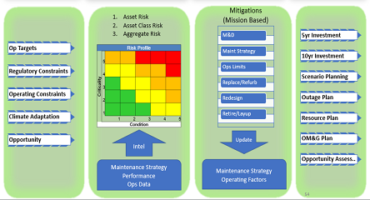
Asset Management Enabling Environment, Social, and Governance (ESG) Principles
At a high level, corporate social responsibility refers to practices and policies undertaken by corporations that are intended to have a positive influence on the world. Along these same lines, there is a growing desire in many organizations to practice environment, social, and governance (ESG) principles in their everyday business operations. In fact, such practical applications of corporate responsibility are increasingly viewed as necessary and of strategic importance. While the drivers for ESG advancement may vary company to company, the implementations tend to follow similar paths...
How Does Bad Asset and Maintenance Master Data Cause Unexpected Downtime?
Unexpected downtime is a major issue that keeps maintenance and reliability professionals up at night and is inevitable in asset-intensive industries – especially manufacturing. Unexpected downtime is becoming more frequent in organizations and can cause a company’s production – and therefore revenue – to come to a halt.
- Rhiana Safieh
- HubHead Corp

Design for Reliability
Today, Ron and Doug discuss Design for Reliability.
- Ron Moore
- RELIABILITY CONNECT

How to Reduce Unplanned Downtime
Downtime refers to the duration of time when your machinery is not in production. While downtime can be planned for equipment set up or scheduled repairs, unplanned downtime refers to downtime that occurs unexpectedly because of an unforeseen shutdown or equipment failure. Every minute your assets are not working costs your company money. For most manufactures, unplanned downtime is the single largest source of lost production time.
- Rhiana Safieh
- HubHead Corp
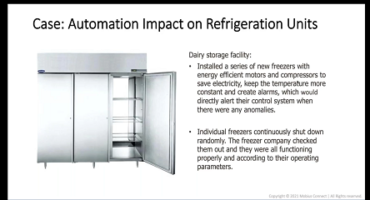
Impact of Automation on Refrigeration Units and the Role of Power Quality
Alan Ross, president of EPRA, presents a case study involving a dairy storage facility. When they installed a series of new freezers with energy-efficient motors and compressors, and they automated the system, individual freezers began shutting down randomly…
- Alan Ross
- Electric Power Reliability Alliance EPRA
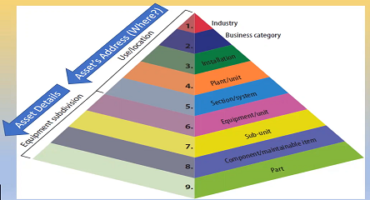
Location Hierarchy Building for an Asset Management System
The first stage in implementing an asset management system is location hierarchy building. Ahmed Kotb explain why this is important, how to do it, and the information we need in order to do it…
- Ahmed Kotb
- Self-employed